
Driveways and Front Gardens in Coventry
Block paving, resin, imprinted concrete, tarmac, stone and gravel
The driveway is usually the biggest thing in a front garden, and the first thing people see. Driveways are a large enough part of our work that we run them through a dedicated team, DNA Driveways Coventry, and we design the walls, beds and paths around them.
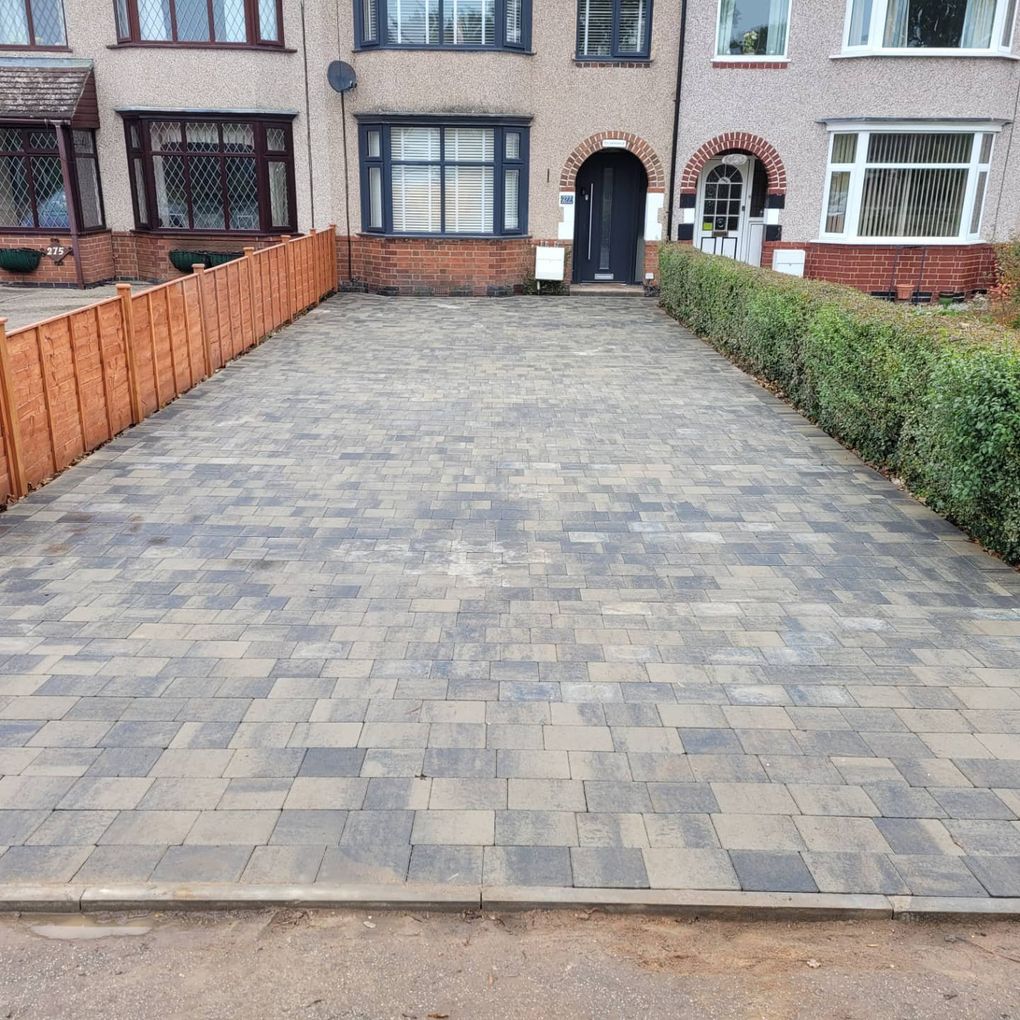
A Driveway Is Only as Good as Its Sub-Base
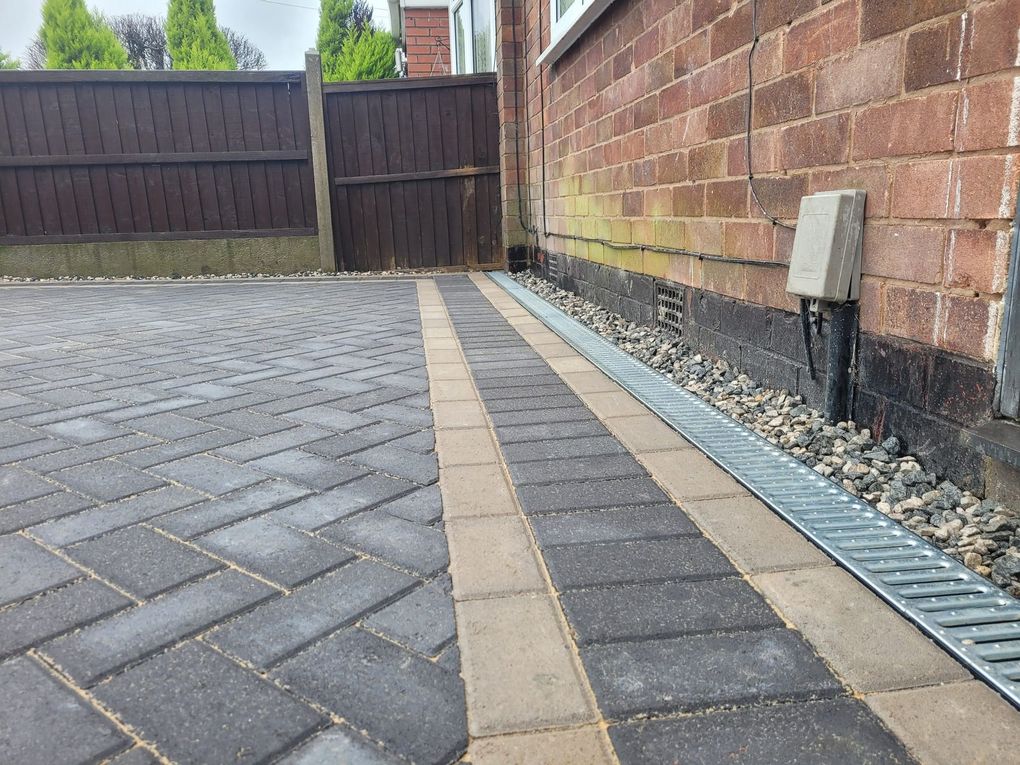
A driveway carries the weight of a car every day, so almost all of its life is decided before the surface goes down. It is the same groundwork we do for every patio and retaining wall: excavate, lay and compact a solid sub-base, and plan where the water goes.
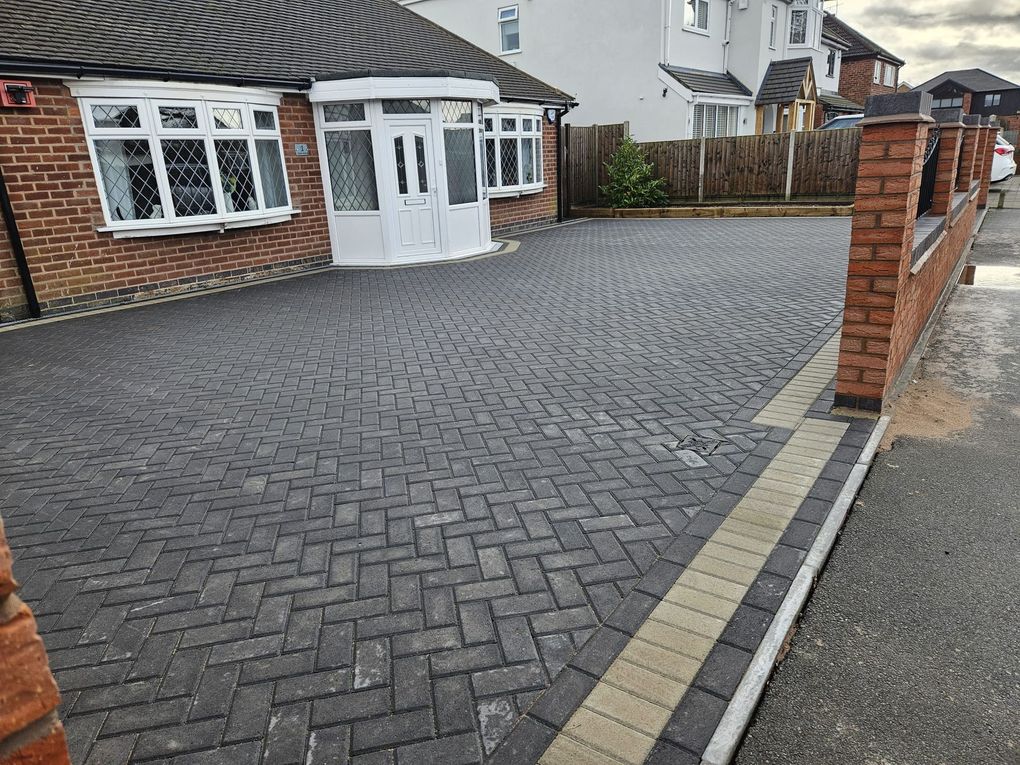
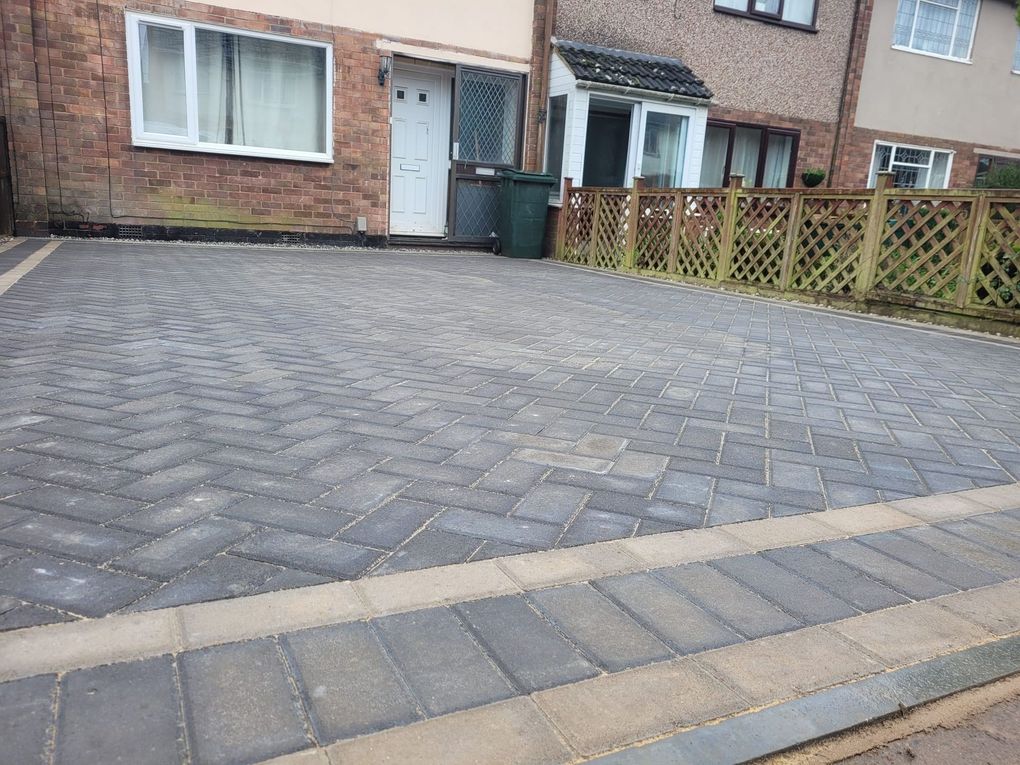
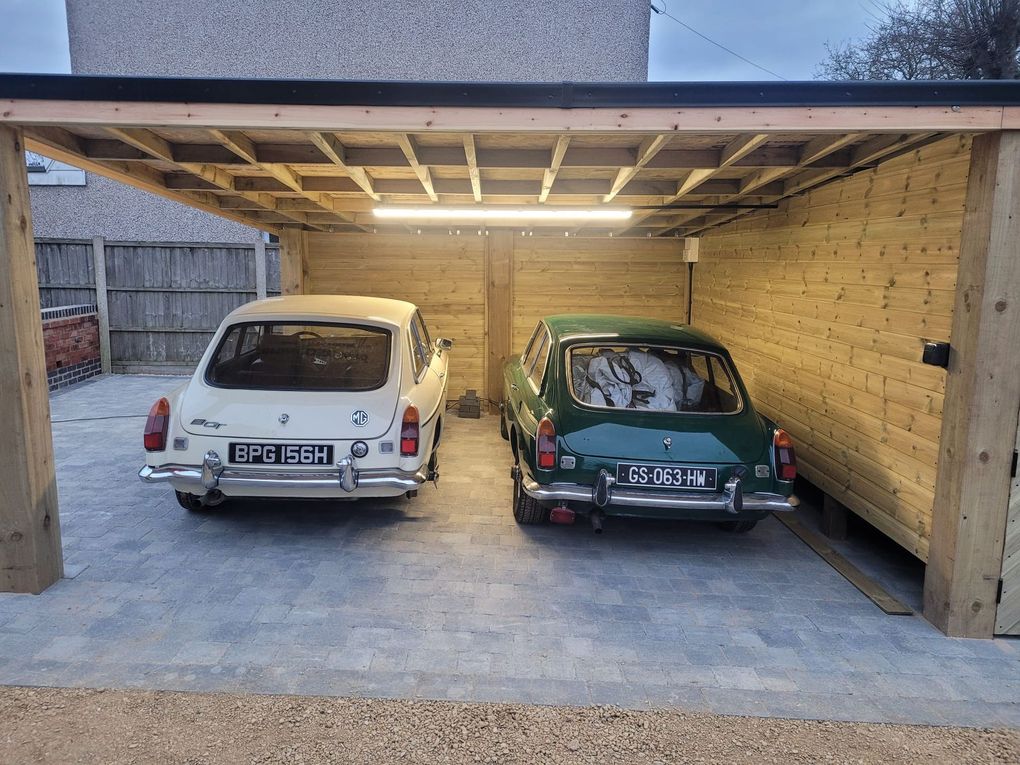
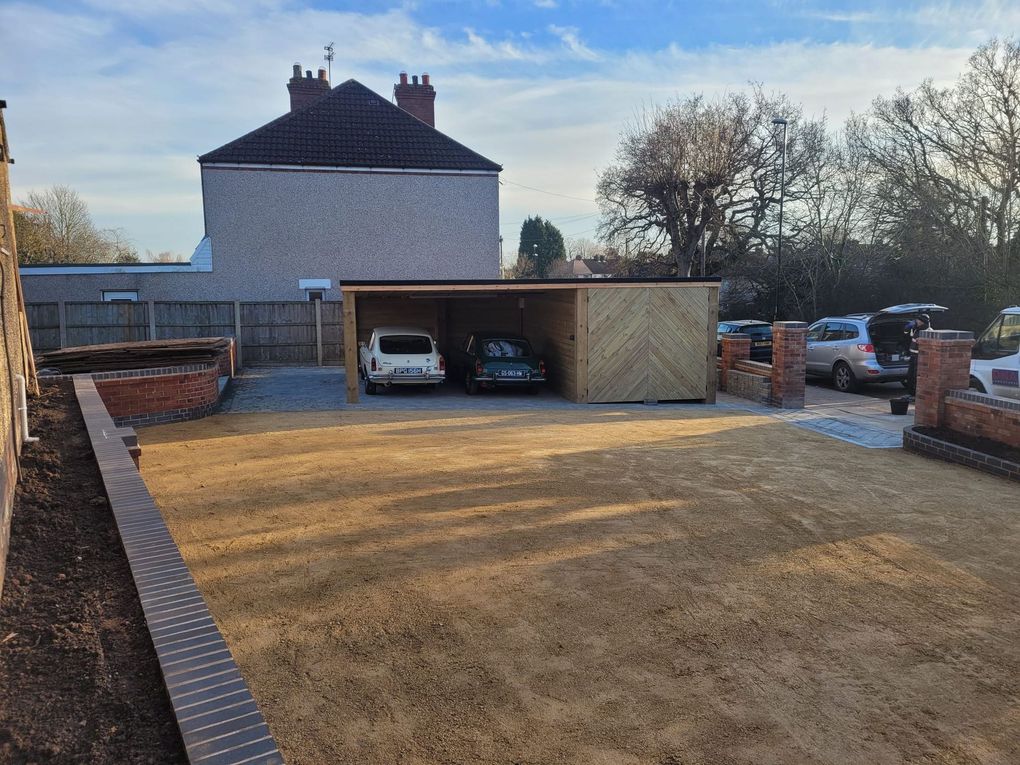
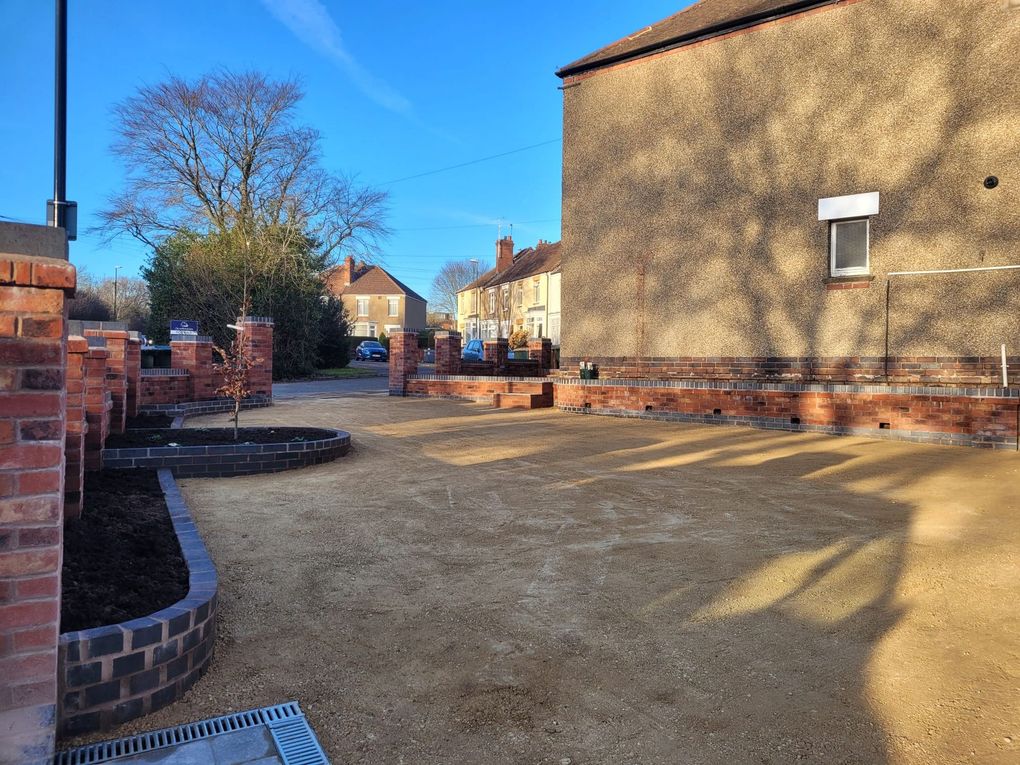
Driveways We Have Built
Which Driveway Is Right for You?
Many driveway companies specialise in one or two surfaces. We lay them all, so we can recommend what suits the house and the budget, and combine surfaces where that helps.
Block paving
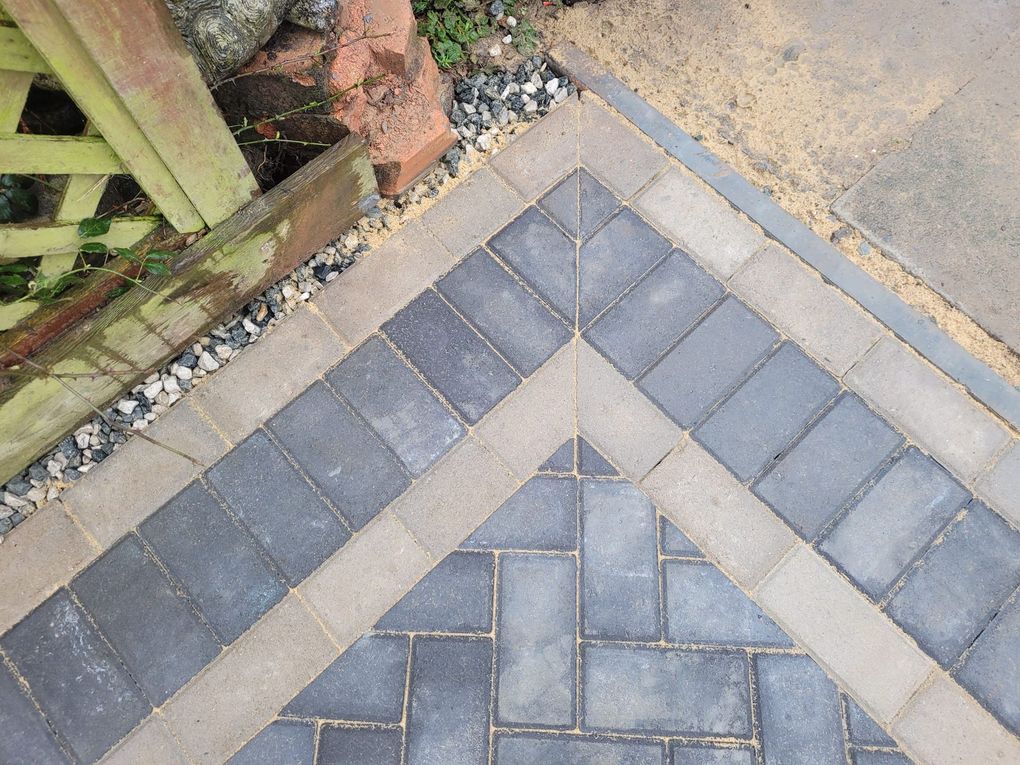
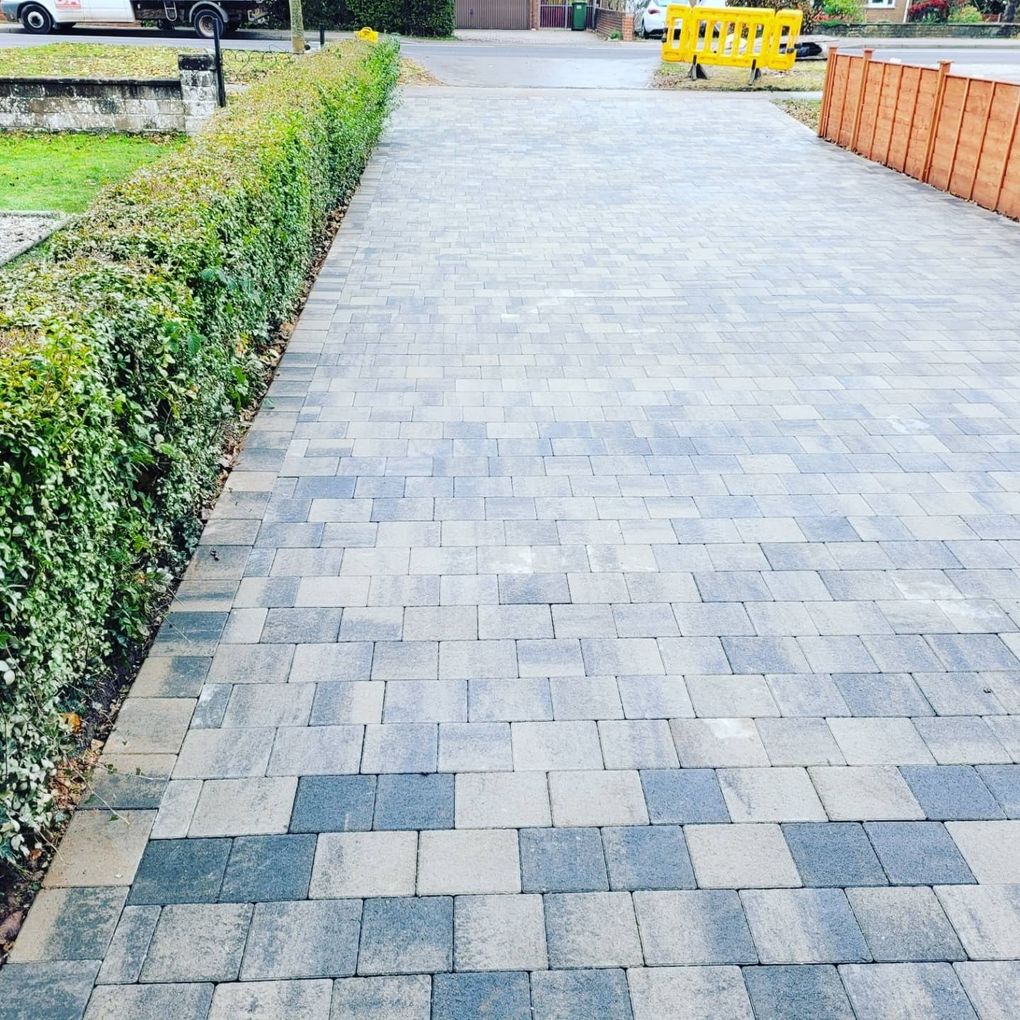
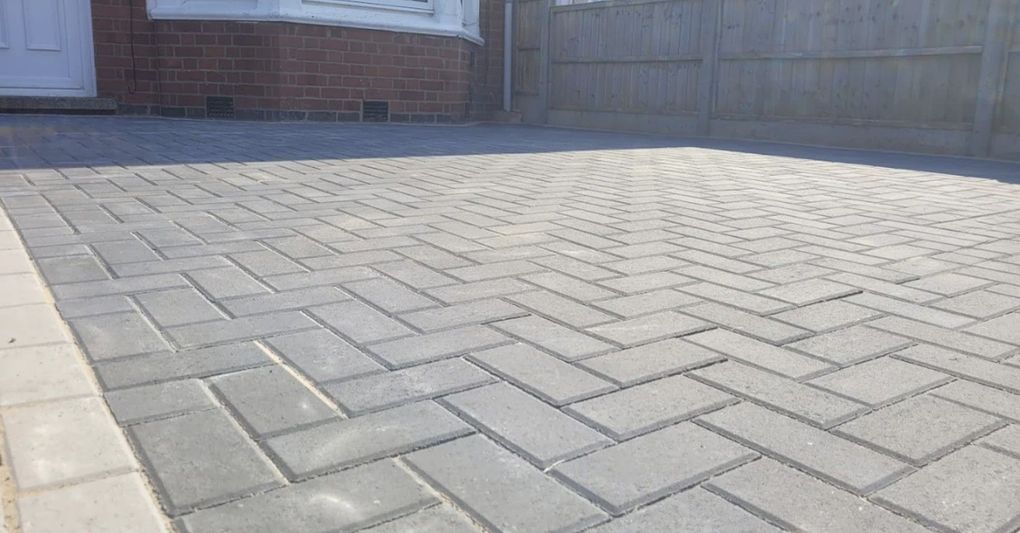
Still the driveway we lay most. Blocks range from crisp modern styles to cobble effects for period homes, laid in herringbone, stretcher bond or basket weave, and can even carry a house number. Depending on the jointing, block paving can be permeable, and it is ideal for framing other surfaces.
Resin bound
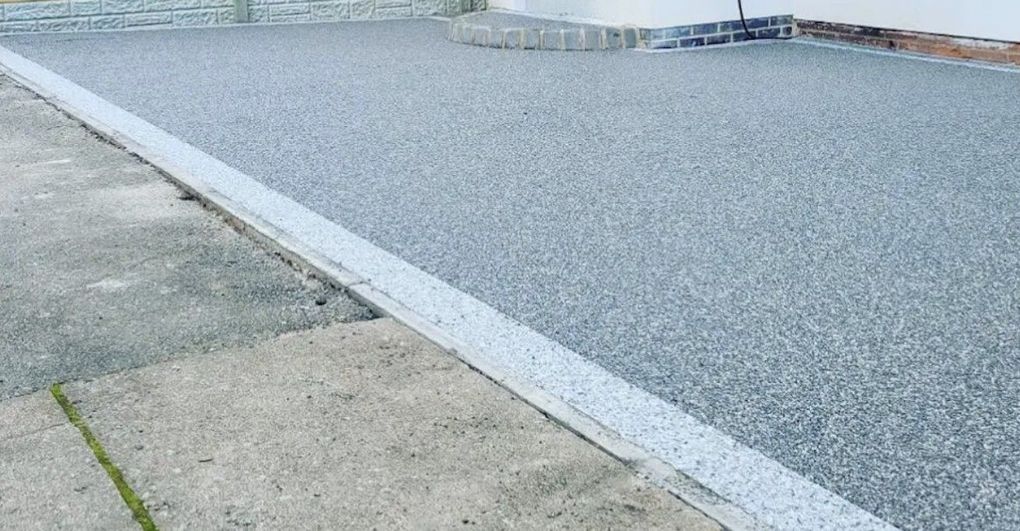
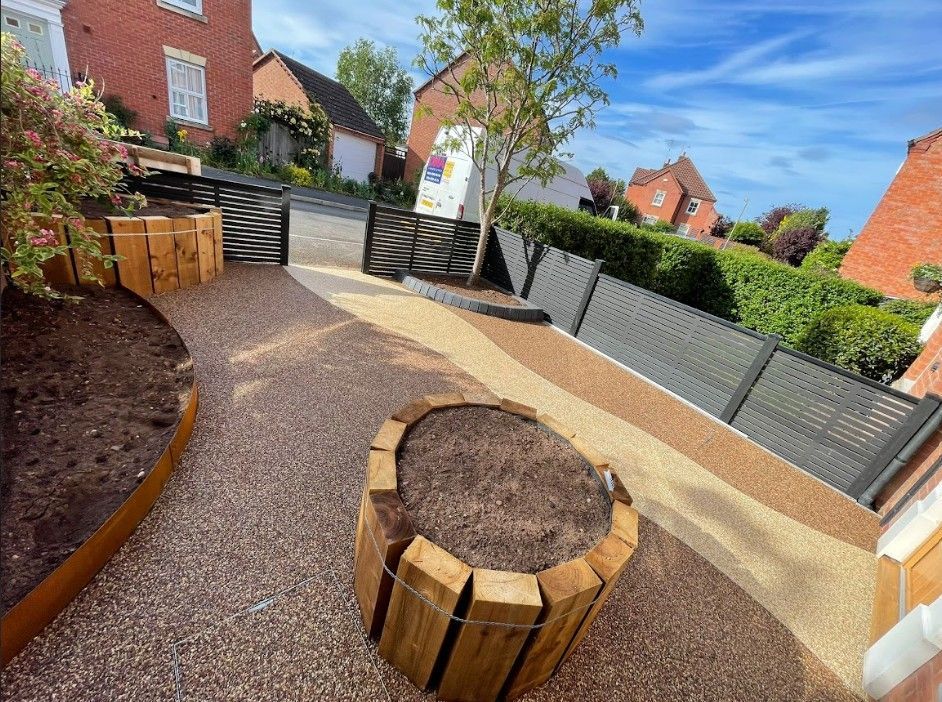
The most requested finish: smooth, low maintenance, permeable and available in a wide range of colours. It costs more than most surfaces, so it pays to do the path or patio at the same time. We only lay resin bound, never resin bonded (see below).
Imprinted concrete
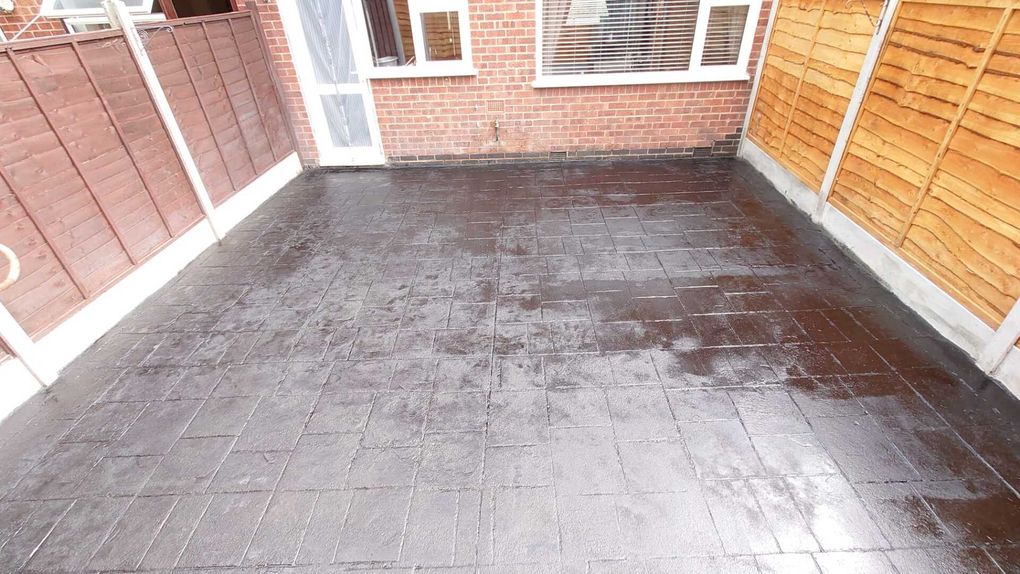
Also called pattern imprinted, printed, pressed or stamped concrete. Our second most popular driveway, with many patterns and colours, and a sealed finish that looks sharp when new and needs resealing to stay that way.
Tarmac
One of the more cost-effective surfaces, and no longer only black: reds, greens, buffs and greys are available. A worn tarmac drive can sometimes be resurfaced rather than replaced, depending on its condition.
Indian stone
Driveway-grade Indian stone gives a high-end look at a reasonable price, provided it is set on a properly built sub-base, which is where cheaper installs fail.
Gravel and self-binding gravel
The most budget-friendly option, and a good way to cut costs on part of a drive: gravel between two wheel tracks of resin, block or tarmac puts the expensive surface only where the tyres need it.
Resin Bound, Not Resin Bonded
The two names sound alike, but they are different systems, so check which one each quote is for.
- Resin bound. The resin and aggregate are mixed together in a forced-action mixer so every stone is coated, then trowelled and floated to a smooth finish. The stones lock together, weeds and algae struggle to take hold, and water drains straight through. This is the only resin driveway we recommend.
- Resin bonded. A layer of resin is spread and loose stones are scattered on top. It gives a gravel look, but the surface is not permeable, so the water needs somewhere else to go, and the top stones tend to come loose. We would not recommend it for a driveway.
Permeable Surfaces and Dropped Kerbs
- The 5 m² rule. For houses in England, paving more than 5 square metres of a front garden needs planning permission unless the surface is permeable, or the water runs off into a lawn or border within the property. Resin bound, permeable block paving and gravel can all meet this. Every driveway we build is designed so surface water drains in line with sustainable drainage (SuDS) principles.
- Dropped kerbs. Driving across the pavement needs a dropped kerb, and a new or wider one needs your council’s approval as highway authority, which is Coventry City Council in the city. Planning permission may also be needed on a classified road.
- Listed buildings and conservation areas usually need permission for changes to the front of the property, including driveways.
Take this as a general guide: the council decides, and we confirm the position for your property before we start.
Keeping a Driveway Looking New
We recommend sealing block paving and imprinted concrete at least every 12 months, after cleaning it thoroughly and letting it dry. On block paving, we then refill the joints with fresh kiln-dried sand before resealing. We clean and reseal every driveway we lay within 12 months of installation, as part of the service.
Driveways as Part of the Front Garden
Because we are landscapers, we look at the whole frontage, not just the parking. New brick walls and piers, raised beds, a path to the door, a strip of artificial grass or planting to soften the edges: done together, the driveway, garden and house look as if they belong to each other, which adds to kerb appeal and, in time, to the value of the house. The same surface can also run through to a patio in the back garden.
Guide prices and the driveway guarantee
DNA Driveways Coventry, our dedicated driveway team, publishes guide prices by surface, its driveway guarantee and more of its work.
Why Choose Us for Your Driveway
Groundwork specialists
Andy has worked in groundworks since 2008, and the sub-base is where a driveway succeeds or fails.
Every surface, honest advice
Block, resin, imprinted concrete, tarmac, stone and gravel, recommended for your house rather than for what we sell.
Designed with the frontage
Walls, beds, paths and drainage planned alongside the driveway, by the same team.
Aftercare included
Every driveway cleaned and resealed within 12 months of installation, as part of the service.
Driveways Across Coventry and Warwickshire
Our driveway team works throughout Coventry and the surrounding towns and villages, including:
Driveway Questions
Why choose DNA Landscapes for my driveway?
Andy has specialised in groundworks since 2008, and we lay every type of driveway: gravel, self-binding gravel, block paving, resin bound, imprinted concrete, tarmac and sandstone. Drainage and surface water run-off are designed in line with SuDS principles, and we design the walls, beds and paths round the drive.
What type of driveway do you install most?
Block paving is still the most popular, followed closely by imprinted concrete and then resin bound.
How often should a driveway be sealed?
At least every 12 months for block paving and imprinted concrete, after cleaning it thoroughly and letting it dry. On block paving, the joints should be refilled with fresh kiln-dried sand before resealing. We clean and reseal every driveway we lay within 12 months of installation.
Would you ever recommend a resin bonded driveway?
No. Resin bonded spreads resin on the surface with loose stones on top, so it is not permeable and the stones come loose. Resin bound mixes resin and aggregate together in a forced-action mixer, then trowels it smooth, so it is permeable, stronger and the right choice for a modern driveway.
Does a new driveway need planning permission?
Not if the surface is permeable, or drains to a lawn or border within the property. For houses in England, paving more than 5 square metres of front garden with a surface that drains onto the road does need permission, and tighter rules apply to listed buildings and conservation areas.
Do I need permission for a dropped kerb?
Yes. A new or widened dropped kerb needs approval from the council as highway authority, which in Coventry is Coventry City Council, and planning permission may also be needed on a classified road.
Where can I see driveway prices?
Our dedicated driveway site, DNA Driveways Coventry, publishes guide prices by surface along with its driveway guarantee. Every driveway is priced after a site visit, because size, access and groundwork vary.
Planning a new driveway?
Tell us about the frontage and how many cars it needs to take, and our driveway team will visit, measure up and price it.
